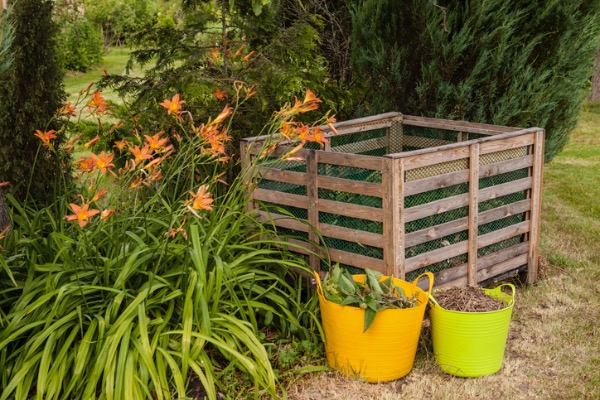
Why compost? Did you know that over 51% of the trash that goes to landfills is actually compostable? In a landfill, organic waste contributes to the generation of methane, a major greenhouse gas. If you compost, it feeds the creatures in the soil that in turn make the nutrients available for vegetables, flowers, shrubs, and trees. A healthy soil takes up carbon from the atmosphere.
Composting food scraps will reduce your household waste by up to 50% and save you money in trash collection!
Make compost at home! If you have a backyard, no matter how small, and access to some “browns” (leaves or woody materials), you can have a compost bin. By composting in your own yard, you decrease the amount of waste going to landfills or incinerators and reduce transportation impacts associated with trash pick-up and transport. Plus you can use the composted materials as nutrients for your lawn, perennials, or vegetable garden. Here are some instructions on the basics of composting from the EPA, MassToss and the Rodale Institute. Find out more under the Steps to Take and the Deep Dive tabs.